What women business travellers look for – and how to build it into your travel policy
Search “hotel safety tips” and women across the web have plenty to share: packing a rubber doorstop to wedge under the door at night; choosing a room between the third and sixth floors; selecting hotels with lifts that need key card access to reach the guest floors; asking reception to hand over the key quietly, without calling out the room number for everyone to hear.
It’s an unfortunate reality. Either consciously or subconsciously, women move through life on high alert, aware of their surroundings and safety – especially when travelling on their own or in unfamiliar destinations.
As Judy Jacobs, Senior Account Manager at FCM South Africa, explains, safety on a business trip, especially for women, isn’t a nice-to-have that sits somewhere below room rate and location; it’s at the very top of the list, and an important part of any hotel programme.
“Both hotel location and room location come up often,” says Jacobs. “The preference is for a mid-level floor, near a lift but not right beside it, and avoiding a stairwell or the end of a long corridor. Once inside the room, the requests are practical: a safe large enough for a laptop, blackout curtains that close fully, and no interleading door, which many women find unsettling.”
What women want
According to the team at FCM, these hotel features are important:
- Reputable chains in safe locations
- Well-lit paths from the car park to the entrance, with no dark stretches within the property
- A genuine 24-hour staffed front desk rather than a night porter (where possible)
- Female staff on duty
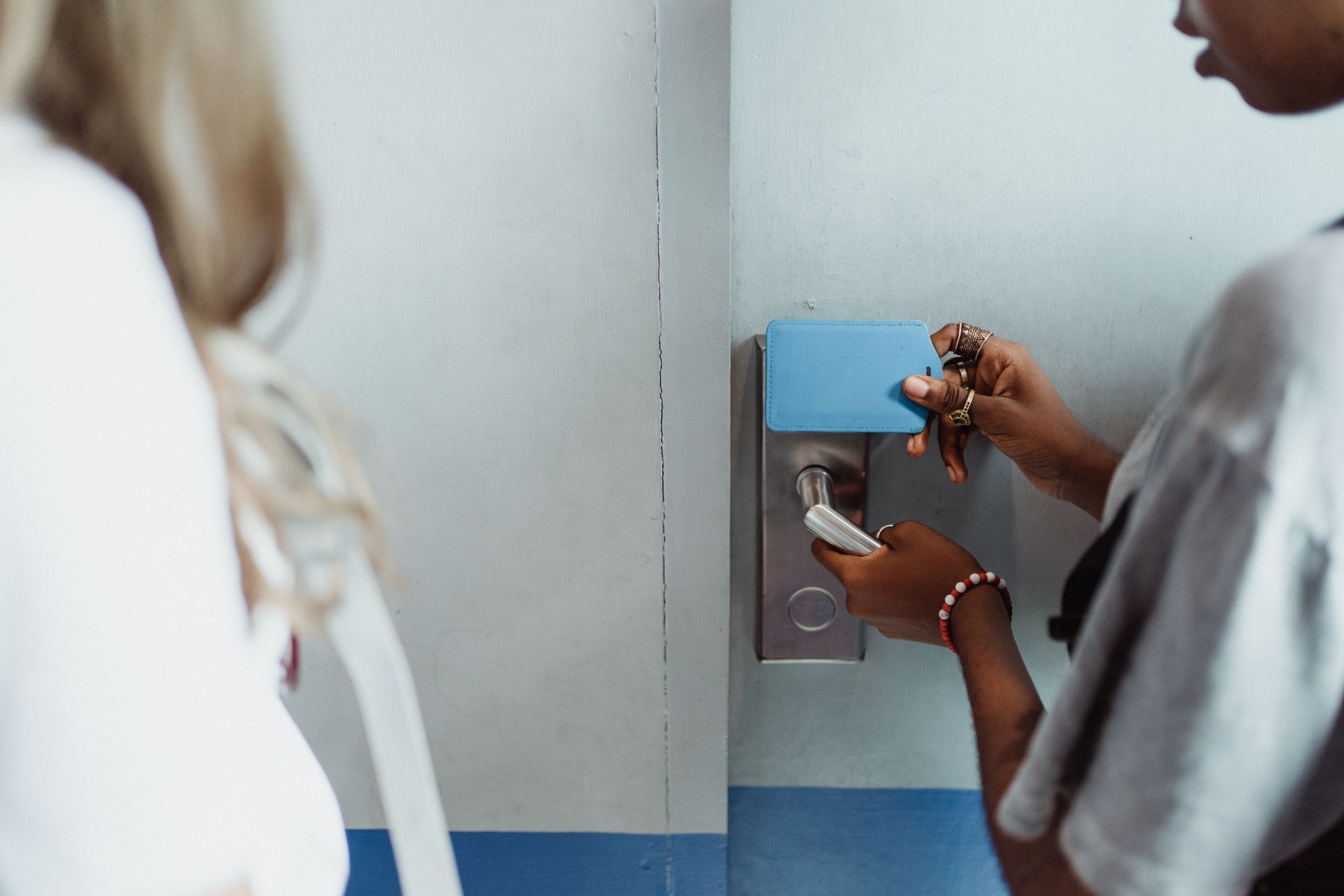
- Key card room access
- A room between the 3rd and 6th floors (high enough to prevent break-ins from the ground – but within reach of a standard fire truck in case of emergency)
- A working peephole and a secondary lock, swing bar or security chain on the door
- An in-room safe big enough to hold a laptop
- Blackout curtains or blinds that close completely
- No interleading door, or one that locks securely from both sides
Building it into travel policy
Of course, a hotel should meet other standards too, including emergency procedures clearly displayed in rooms, working smoke detectors and fire safety equipment, CCTV in public areas and entrances, and security guards on the premises. The trick is building it into your travel policy.
“Many of our customers, for example, those in the mining sector, have stringent travel, safety, and duty-of-care standards. These non-negotiable requirements directly influence which hotel and accommodation suppliers are considered suitable for their travellers,” says Saskia Fourie, Account Manager at FCM South Africa. “Wherever possible, we also encourage the use of our preferred hotel partners. While these partnerships offer commercial benefits, the bigger advantage is that the properties have already undergone a degree of vetting and due diligence. We have established relationships with these suppliers, understand their standards, and have clear escalation channels should issues arise. This level of familiarity and accountability enables us to better support our customers, ensure compliance with their travel and safety policies, and provide travellers with a safe and consistent experience.”
Regional knowledge is also important. For example, key card-only lift and floor access is standard in large city hotels but not always feasible elsewhere. The same goes for monitored rather than merely recorded CCTV. A good travel management company will know which standards a hotel in a given location can realistically deliver – and how to spot the red flags.
For Jacobs, these might be dismissive responses to security questions, “that’s never happened here” deflection, inconsistent messaging from staff, or common areas that feel poorly lit, unmaintained or deserted at night.
“Thankfully, there are plenty of green flags too. For example, visible but not intrusive security; staff who share direct ‘in-case-of-emergency’ telephone numbers; staff who are quick to respond to a guest’s requests or concerns; and other business travellers staying in the hotel, which demonstrates corporate confidence,” says Jacobs.
Asking the right questions
When negotiating a hotel agreement, you need to ask the right questions: What is the hotel’s protocol if a guest reports feeling unsafe or harassed, and how quickly does it respond? How does the property keep the guest’s information secure (including floor and room number)? What background checks are run on staff, particularly night and maintenance teams who can access rooms? And can room assignments avoid predictable patterns, such as always placing solo travellers in the same wing?
The strongest programmes then go a step further and put agreements in writing. These might include the right to change rooms at no charge if a traveller feels unsafe, and a set window in which any incident is reported to the company or its TMC. As Jacobs puts it, “It’s easy to assume a hotel or chain’s standards cover this, but having it contractually documented gives us recourse and shows the hotel we’re serious.”
Finally, listen to your travellers.
As Nomapelo Kova, Senior Account Manager at FCM South Africa, points out, the people using your hotel programme are the ones best placed to tell you whether it is working. “The most valuable feedback often comes directly from travellers themselves,” she says. “They experience a hotel’s safety and security first-hand, so listening to them, and acting on what they say, is how a hotel programme stays up to date, reliable and safe.”