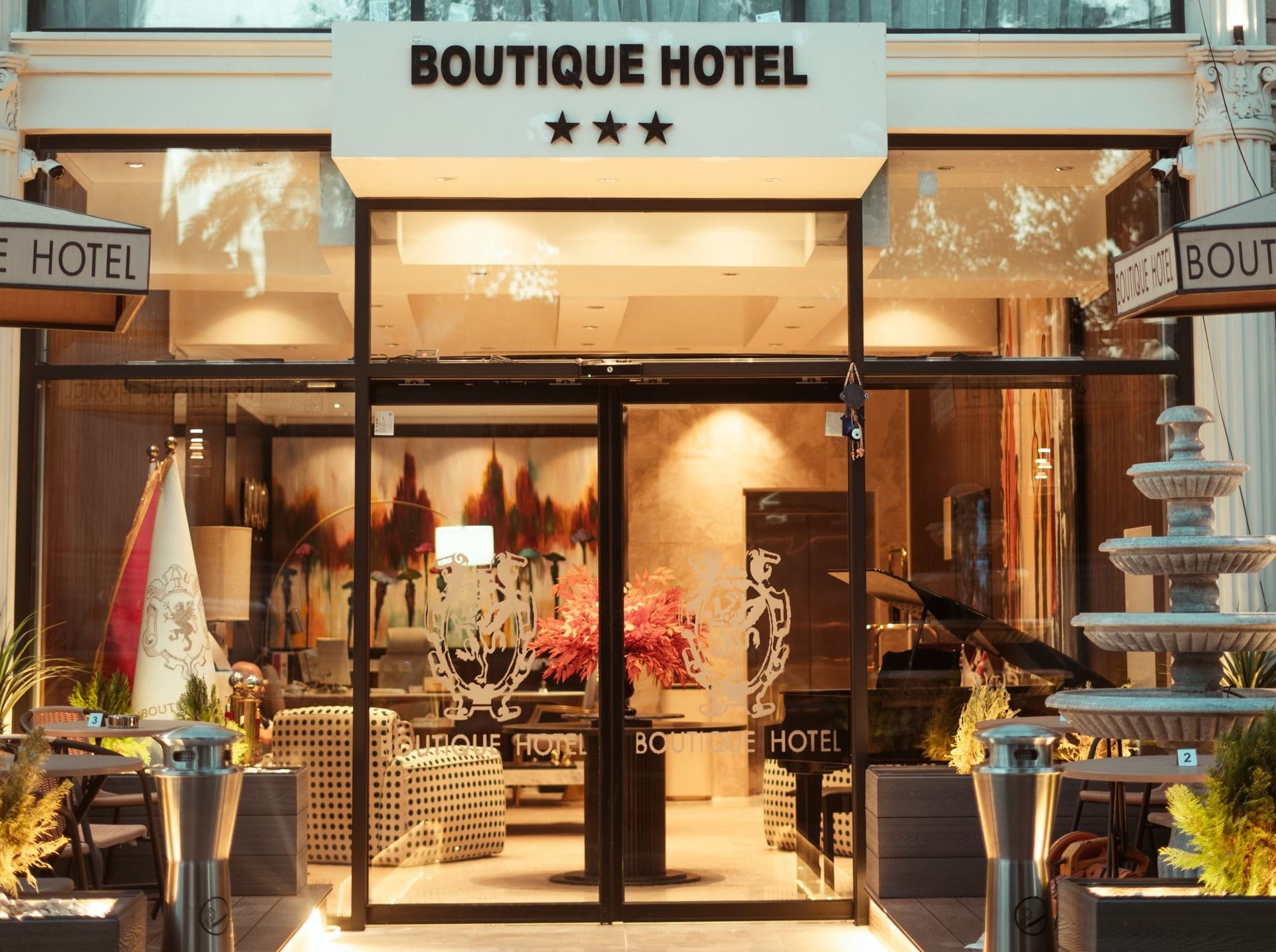
The booking confirmation looks the same everywhere: three (or four) stars in Sandton, Stuttgart, Shanghai, Shenzhen and Sekondi-Takoradi. But is it consistent? Or even comparable?
As Mummy Mafojane, GM of FCM South Africa explains, when it comes to domestic hotel rooms, South Africans are accustomed to a certain size and standard. In contrast, European city hotels are notoriously compact, often squeezed into historic buildings with decidedly small rooms and limited amenities. And in secondary, satellite cities in developing regions, water, power and connectivity can be hit and miss.
For the travel manager approving the trip, the rating suggests a known quantity: a decent bed, working Wi-Fi, breakfast and a front desk that answers. For the traveller who checks in, the reality behind those stars depends entirely on who awarded them, and in some markets the answer is nobody at all.
“Our latest FCM Insights Report shows that businesses are becoming more cost-conscious and more deliberate about where their accommodation spend goes, with more corporate volume moving into the 3- and 4-star tier,” says Mafojane. “Across Africa, corporate demand is holding firm, and our top African destinations are Mozambique, Zambia, Ghana, Botswana and Zimbabwe, all corridors where South African business is growing. The only catch is that a 4-star rating can mean something different in each of them, and that’s where a managed hotel programme earns its keep.”
Who stands behind the stars? Hotel classification in FCM’s top destinations
| Market | Who grades it | How the system works | What actually awaits travellers |
| South Africa | Tourism Grading Council (TGCSA) | Credible and internationally benchmarked, though participation is voluntary. | Extra space, room service, TV, secure parking, proper breakfast at 4-star; round-the-clock staffing, valet parking, business centre and spa at 5-star. |
| Mozambique | Government classification under the national tourism developments regulation | Official state system, hotels classified 1 to 5 stars. | The framework was modernised in 2016, replacing colonial-era rules dating to 1969 |
| Zambia | Zambia Tourism Agency, under the Tourism and Hospitality Act 2015 | Official; grading rollout began under a 2018 statutory instrument. | The previous classification exercise dates to 1995, and “ungraded” remains a recognised licence category, so many properties legally operate without stars. |
| Ghana | Ghana Tourism Authority, under the Tourism Act | Licensed and graded 1 to 5 stars. | A structured, dependable benchmark, especially in Accra. |
| Botswana | Botswana Tourism Organisation, criteria set with the Botswana Bureau of Standards | Compulsory by law for all licensed tourist enterprises. | One of the region’s most rigorous and demanding assessment frameworks. |
| Zimbabwe | Zimbabwe Tourism Authority, under the Tourism Act | Official; grading regulations in force since 2005, and graded facilities must display their rating | Hotels graded 1 to 5 stars against a national register. |
| Kenya | Tourism Regulatory Authority, under East African Community criteria | Due for a refresh – nationwide reclassification underway. | Current stars date from the last exercise and could be nearly a decade old before renewal. |
| Nigeria | Overseen by the Nigerian Tourism Development Authority (NTDA), but not enforced | Ratings are largely self-assigned. | A four-star booking that reflects the hotel’s own standard rather than an outside benchmark. |
| Germany | Hotelstars Union | Harmonised criteria shared across member countries. | One of the most predictable 4-stars in world travel, it requires 24-hour reception, lobby with seating and beverage service, hotel bar, minibar or room service, choice of pillow types, bathrobe and slippers on request. |
| United Kingdom | AA and national tourist boards | Credible but voluntary. | Trusted benchmark with high standards, but many excellent hotels carry no stars at all. |
| United States | No official system. The most trusted professional grading systems are privately run | The American Automobile Association (AAA) uses a 1 to 5 Diamond system, while Forbes Travel Guide assigns 1 to 5 Stars based on in-person inspections | Stars on booking sites are marketing, not regulation. |
| UAE (Dubai) | Government classification | Mandatory for every hotel | The product is consistent. 4-star requires a concierge service and at least one retail outlet on-site; standard rooms must be a minimum of 13m². 5-star carries the same base requirements plus multiple swimming pools, spa with treatment menu, gym and kids’ club, and generally a minimum room size close to 30m². |
| China | State-administered national system | Official, with criteria all of its own. | Markers of luxury differ from Western conventions, for example, shuttles and paging service required at 5-star level. |
“When a company tells us a traveller had a bad stay somewhere on the continent, the booking almost always said four-star. Nobody lied about the rating. There was just no authority behind it,” says Mafojane.
How the international list stacks up
FCM’s top international destinations for South African corporates are Germany, the United Kingdom, the United States, the United Arab Emirates and China (2026 FCM booking data), and even in these mature markets the stars don’t necessarily align, as the table shows.
Which brings us to what the rating actually buys. In South Africa, a 4-star property typically comes with extra space, room service, TV, secure parking and a proper breakfast. By 5-star, you’re looking at round-the-clock staffing, valet parking, 24-hour room service, luggage assistance, a business centre, and exceptional on-site facilities like fine dining and a spa.
A room in a 4-star hotel in central Paris or London is much smaller, and the traveller is paying considerably more for it. Corporate travellers paid an average of US$349 a night in London and US$531 in New York in the last quarter of 2025, against US$233 in Cape Town and US$196 in Johannesburg (FCM Consulting Insights Report 2026). A Johannesburg traveller landing in New York pays more than double the rate for a fraction of the space; the rating stays the same while the experience shifts.
What to look for beyond the star
In markets without enforced grading, the questions that actually predict a good stay have little to do with thread counts. Does the property have genuine backup power and water, meaning generator and borehole capacity that covers guest rooms rather than only the lobby? Are transfers and parking secure? Is the Wi-Fi reliable enough to run a video call, since connectivity in a business hotel is a working tool rather than an amenity? Will the card machine work, and can the rate be billed back rather than settled in cash? What are the real cancellation terms? And does the property appear in your travel management company’s duty of care picture at all?
“A star rating tells us what a hotel thinks about itself,” says Mafojane. “We look at backup infrastructure, secure transfers, payment, cancellation terms and whether we can reach a decision-maker at the property directly. Those are the things that decide whether a trip works.”
Hotel development in Africa has long followed colonial and linguistic lines, with French brands clustering in West Africa and Portuguese investment shaping Angola and Mozambique. Yet Mafojane says many of the most consistent properties on the continent are local chains.
“They build for the realities of their own markets, so a generator, a borehole and a driver who actually arrives are standard rather than selling points. In several of our top destinations they are simply the best-performing option, and traveller feedback confirms it trip after trip.”
The conclusion for travel managers is clear. Where the star rating cannot carry the weight placed on it, the managed programme does that work instead: verified properties, negotiated rates with consistent inclusions, traveller feedback that flags a slipping property early, and duty of care visibility across every booking. FCM now goes a step further, advising buyers to write travel policy around hotel brand types rather than star ratings, because brands describe the actual product more reliably (FCM Consulting Insights Report 2026).
“Companies that spend time interrogating and building their hotel programme will sleep better – and pay less – than those defaulting to star ratings in their travel policy,” says Mafojane.
*** ends ***
About FCM Travel:
FCM Travel, the flagship corporate travel brand at Flight Centre Travel Group (FCTG), is the business travel partner of choice for large national, multinational and global corporations. We are an award-winning global corporate travel management company ranking as one of the top five by size around the world. We operate a global network which spans more than 100 countries, employing over 6000 people.
FCM are transforming the business of travel through our empowered and accountable people who deliver 24/7 service and are available either online or offline. Leveraging FCM’s negotiating strength and supplier relationships in conjunction with our tailored business travel programs, our expertise delivers more for our clients where it matters most to them.
Visit us at www.fcmtravel.co.za