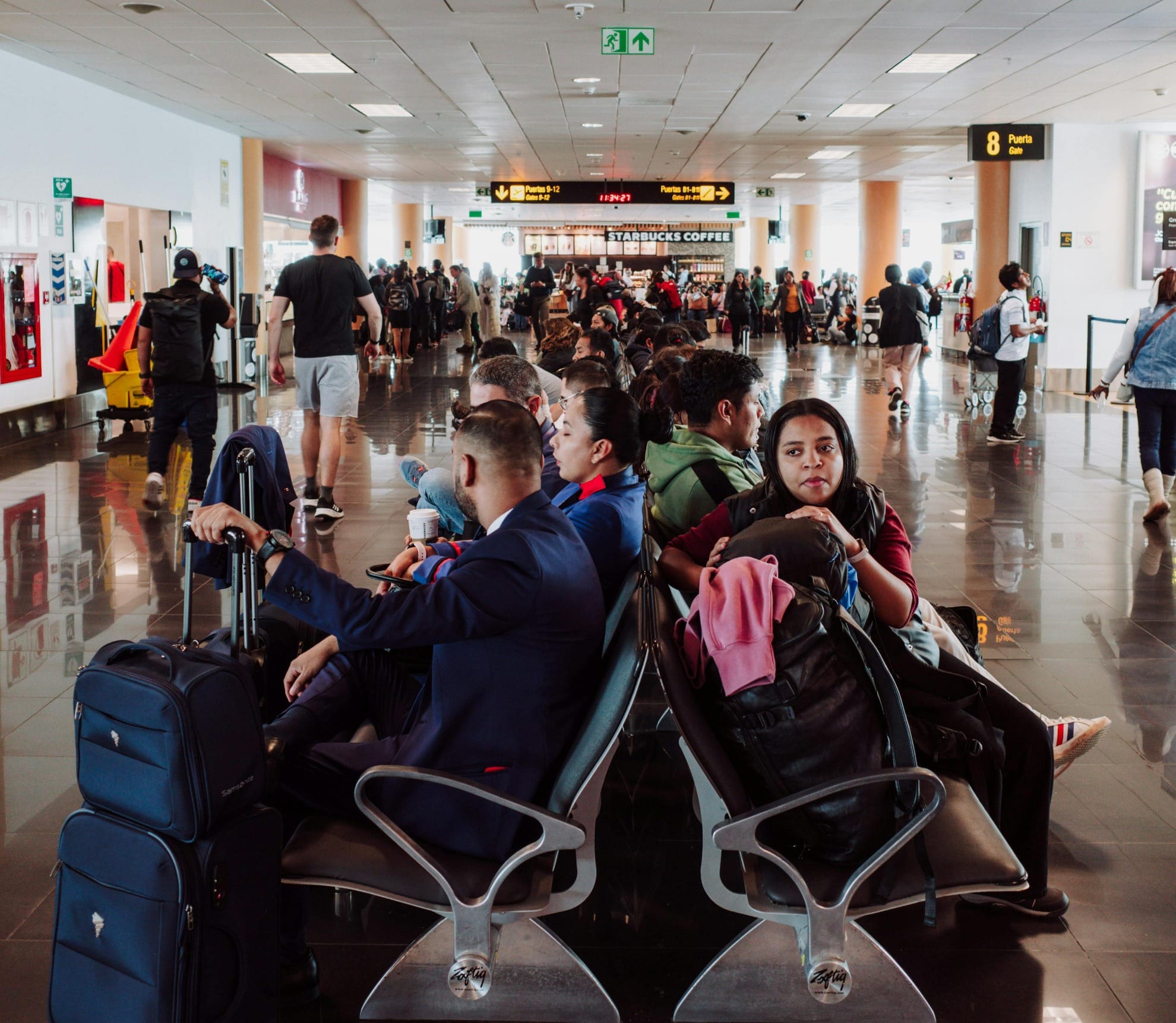
Johannesburg – On Saturday, 28 February war in the Middle East grounded three of South Africa’s key long-haul carriers: Emirates, Etihad and Qatar. With airspace closed, thousands of travellers were stranded – either in one of the three hubs (Dubai, Abu Dhabi and Doha) or at their destination, with return flights in question.
Three weeks on, and flights are slowly returning. As an example, Emirates has resumed operations and is progressively rebuilding capacity. They’re currently operating two daily flights from Johannesburg and one daily flight from Cape Town, with plans to resume three weekly flights from Durban as soon as possible.
But as Herman Heunes, GM of Corporate Traveller explains, while operations have resumed, the situation can change in an instant, with delays, cancellations and restricted schedules still impacting travel plans.
We sat down with the Corporate Traveller team to discuss exactly what travel managers, travel bookers and travellers need to know right now.
1.Capacity is still constrained – and pricing reflects it
The Middle East normally acts as the primary aviation corridor connecting South Africa to Europe, Asia and beyond. When thousands of flights are cancelled or rerouted, you remove a massive amount of inventory from the market. Supply disappears but demand does not.
And as Heunes explains, capacity is not the only factor at play.
“Fares are climbing for several reasons. Yes, supply and demand is a factor, but so are rising oil prices, longer flight paths and associated operational costs (as airlines avoid restricted airspace), and increased operational expenses, including insurance premiums, which are often passed on to travellers.”
2.New routes are filling up – fast
Alternative hubs, including Addis Ababa, Singapore and various European gateways, are growing in popularity as travellers seek non-Gulf routings, further compressing available capacity and driving up last-minute prices.
Corporate Traveller’s latest booking data shows a spike in sales for, among others, Ethiopian Airlines (+100%), British Airways (+100%), Virgin Atlantic (+303%), Lufthansa (+103%), KLM (+114%), Air France (+20%), Singapore Airlines (+109%), Cathay Pacific (+106%) and Air China (+225%).
For Heunes, the practical implication is clear: if your team is booking independently, they are competing for constrained seats, without the expertise, priority access and supplier relationships that a managed travel programme provides.
3.Travel insurance – still your best bet
Perhaps the most pressing question over the last few weeks has been around what travel insurance will – and won’t – cover.
Speaking on an ASATA webinar during the week, Jason Veitch, Business Head for Accident & Health at Santam Travel Insurance (formerly TIC) explained that war is a universal exclusion across all travel insurance products globally. It’s not unique to South Africa, any single insurer, or indeed the travel industry.
“War exclusions exist because the scale of conflict can affect hundreds of thousands of travellers simultaneously – and no insurance pool can absorb that,” says Veitch. “But while war exclusions apply to trip cancellation and curtailment, including additional accommodation costs; other benefits, like medical, remain in place.”
This is important, because unexpected medical costs can be crippling for travellers.
“The main reason for travel insurance is actually medical,” says Veitch. “And that’s what sometimes gets lost in these conversations. Medical cover is still available. Luggage cover is still available. Other benefits are still available. We have had policyholders in hospitals in the region being cared for under their travel insurance. That’s exactly what a policy is there for.”
For Heunes, travel insurance remains a non-negotiable. But it’s important to read the Ts&Cs.
“Different policies will have different wording dealing with war exclusions, known events and government advisories,” says Heunes. “It’ll impact companies doing business in different regions across the world. Understanding what your team is covered for, including medical evacuations, and what territorial limitations might apply, is critical to managing risk.”
4.Airline policies – where does their responsibility begin and end?
During a disruption of this nature, airlines have clear obligations to their passengers. If your flight is cancelled before you depart, you are entitled to an alternative flight or a full refund, with no penalties. If you have already departed and find yourself stranded mid-journey, that responsibility expands: the airline must rebook you, reroute you through partner carriers if necessary, and accommodate you until you reach your final destination.
However, if you choose to cancel a forward booking on a flight that is still operating, standard cancellation terms apply. Check your fare conditions carefully and contact the airline or your travel expert before making that call.
It’s also worth noting that fares are locked at the time of booking – no fuel surcharge increases will be applied to existing trips.
“We have to acknowledge the response of the airlines,” says Heunes. “Emirates, Etihad and Qatar have handled an extraordinarily difficult situation with real professionalism. Extended call centre hours, regular updates and clear communication with agents – they’ve worked hard to keep the trade informed and to process changes and refunds as quickly as possible. It’s made a real difference.”
5.Duty of care – do you know where your people are?
As Heunes explains, any company with a travel programme – big or small – has a duty of care to its travellers. In practice, that means having a clear travel policy in place; access to reliable pre-trip travel information; clear restrictions on travel to higher-risk countries; the ability to locate and contact your travellers quickly in an emergency; and a crisis management plan for when things go wrong.
“This is where a travel management company proves its worth,” says Heunes. “When a crisis hits, visibility is everything. A centralised booking system; 24/7 emergency support; strong airline partners; crisis management plans – it’s all part of a managed travel programme.”
-ENDS-
MEDIA CONTACT
For more information about Corporate Traveller, or to interview Corporate Traveller South Africa GM Herman Heunes, call Sonnette Fourie on 081 072 2869 or email sonnette@bigambitions.co.za.
About Corporate Traveller
Corporate Traveller is a division of the Flight Centre Travel Group, dedicated to saving businesses across Southern Africa time and money. Corporate Traveller has the benefit of being part of the world’s third-largest travel retailer, leveraging its global negotiating strength. It has access to over 50 of the world’s leading airlines and deals with more than 100 000 hotels around the world to guarantee savings for clients. Corporate Traveller provides clear, consolidated reporting of all its clients’ travel activities, helping them to control travel spend and identify opportunities to save costs.
Issued by:
Big Ambitions
Sonnette Fourie
+27 81 072 2869